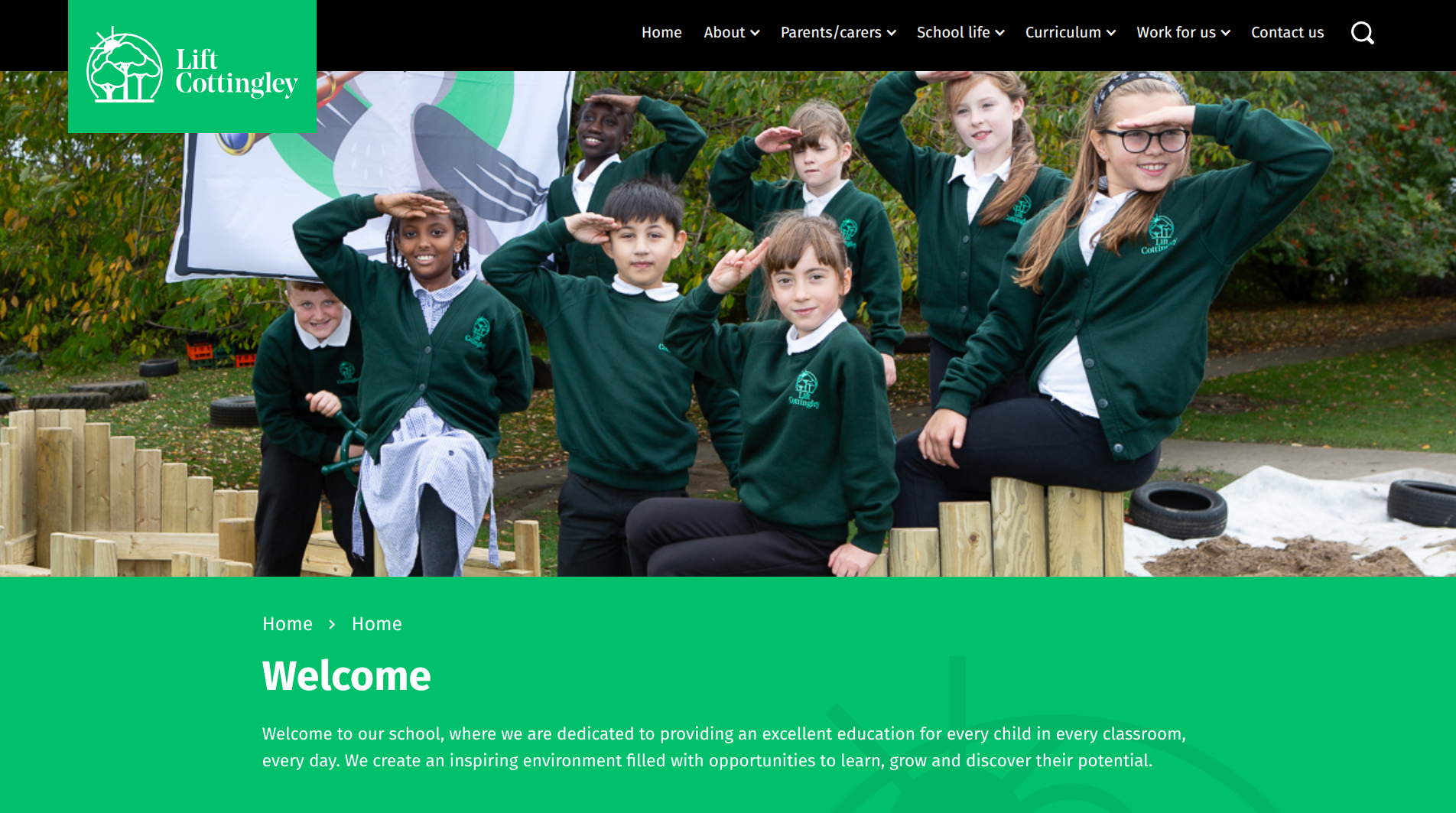
OPAL play policy
No items found.


At Lift Cottingley, we believe that play is fundamental to children’s development, wellbeing and learning. We commit to embedding high-quality, inclusive and purposeful play into daily school life. This policy guides our decisions and actions relating to outdoor play and learning, and reflects our wider school values of inclusion, independence, communication, confidence, problem solving and safe risk-taking.
We believe every child deserves the right to play in a way that is free, inclusive and meaningful. Play helps children make sense of the world, express themselves, form relationships and develop important life skills. In line with the OPAL Primary Programme, we know that better, more active and creative playtimes lead to happier, healthier children and stronger engagement in learning.
Our play provision supports children’s development across physical, emotional, social and cognitive domains. It is built on the principles of choice, challenge, exploration and ownership—empowering pupils to build resilience, curiosity and responsibility within a safe environment.
Play at Lift Cottingley is:
We aim to:
We uphold the UN Convention on the Rights of the Child, especially:
We actively listen to children’s views about play and shape provision accordingly.
Our approach is rooted in national guidance (HSE, 2012), which promotes a balanced approach to risk in play. We believe risk is essential for developing judgement, confidence and life skills. Our site offers age-appropriate challenges in a well-managed, supportive environment where adults help children assess and manage risk safely.
Dynamic risk assessment is part of daily practice, empowering children to make decisions while remaining safe. This is particularly important in helping prepare them for real-world situations and responsibilities.
4.6 GUIDANCE Health and Safety Executive (HSE) – Managing Risk in Play and Leisure.pdf
We use OPAL’s three supervision models:
Staff are trained to observe, support and step in where appropriate, without restricting children’s autonomy unnecessarily.
Except for new children in EYFS, whose skills and orientation in the school environment need to be assessed, the school does not believe direct supervision is possible or beneficial. The Play Team will use ranging and remote supervision models, so that children can quickly find an adult and adults can patrol large areas to gain an awareness of the kinds of play and levels of risk likely to be emerging.
During outdoor play sessions we commit to a minimum of one trained member of staff on our front playground, one trained member of staff on our back playground and one trained member of staff on our field, to supervise all other children. Throughout the session, other Play Team members will supervise the various OPAL Play Zones responding to pupil numbers.
The school will help children maximise the benefits they can gain from play by the provision of trained staff, who are informed by and work in accordance with the Playwork Principles. Staff will use and refer to these principles when appropriate interventions are needed, and ultimately will strive for facilitating an environment that nurtures children’s self-directed play. Staff are also available to participate in the play if invited.
The school facilitates the use of outdoor play equipment only during school hours (excluding after school and breakfast club times when supervision outside is not available), children are not permitted to use our OPAL resources or Play Zones before 8.30am or after 3.00pm, even with guidance - parents/carers are fully responsible for their children at these times.
Adults at Lift Cottingley act as facilitators, not directors, of play. Trained in the Playwork Principles, our staff create rich play environments and respond sensitively when intervention is needed. Adults are available to extend play, offer new materials, model language and encourage collaboration—while preserving children's ownership of their play.
We provide a broad and accessible play offer that reflects our commitment to equality. Our play spaces meet the needs of all pupils, regardless of background, ability, gender or belief. Play is a key part of how we promote inclusion, social connection and mutual respect.
We view our outdoor spaces as an extension of the classroom—essential to learning, wellbeing and community. Our site is intentionally designed to inspire curiosity, allow exploration and connect children with the natural world. Through their interactions with the environment, children build a sense of responsibility and pride, developing the awareness that they are stewards of something bigger than themselves.
We aim to create play spaces that:







Lift Cottingley
Dulverton Grove
Leeds
West Yorkshire
United Kingdom
LS11 0HU
(For Sat Nav please use LS11 0LD)